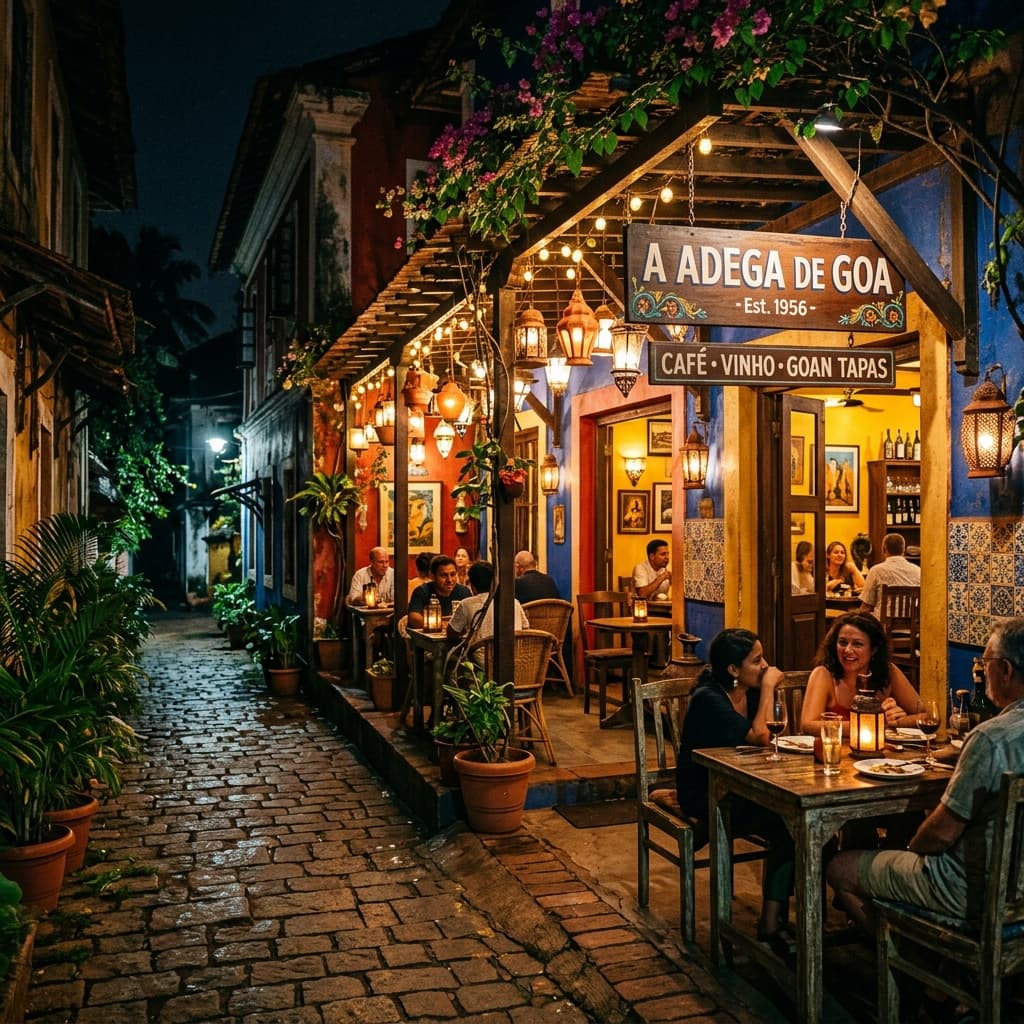
There are two kinds of feni in Goa. The kind tourists drink — aged, bottled, served as a novelty shot at a beach shack — and the kind locals drink. Fresh-distilled, single-run, warm from the still, taken with a cashew apple chaser in an orchard in Sattari. This is a guide to the second kind.
Understanding What You're Drinking
Cashew feni (caju feni) is made from the fermented juice of the cashew apple — not the nut, which is a separate crop entirely. The apple, which most people discard, is a soft, astringent, intensely flavoured fruit that oxidizes almost immediately after picking, which is why you will never find it in a market.
The juice is extracted by treading — literally foot-pressing the apples in a stone basin called a colmi — and left to ferment naturally for 2–3 days. The first distillation produces urrac, a low-proof (approximately 15%) first pressing that is drunk fresh and doesn't keep. The second distillation produces feni proper (40–42%). A triple distillation creates tres, which is rare, expensive, and worth seeking out if you care about spirits.
The season runs from March through May, with peak distillation in late April and May across the Goan interior — particularly in the talukas of Sattari, Quepem, Sanguem and Dharbandora.
Where To Go
Sattari Taluka (North Goa Interior)
Sattari is the most productive cashew-growing region in Goa and arguably produces the finest feni. The village of Valpoi is the administrative centre, but the orchards run through dozens of smaller settlements — Maulinguem, Nanoda, Pale.
Most distillation here is conducted by families who have been making feni for four or five generations. The stills (bhattis) are clay pot affairs, heated over wood fires, cooled by water-dripped clay pipes. Visiting one requires an introduction — this is not a tourist attraction. It is a working agricultural operation, and families are not accustomed to drop-in visitors.
Quepem (South Goa)
South Goa's feni is generally softer and slightly sweeter, owing to different cashew varietals and slightly different fermentation conditions. Quepem has a cluster of producers around the town itself and in the surrounding villages.
Panjim's Only Dedicated Feni Bar
If the orchard visits aren't possible, Joseph Bar near the Municipal Garden in Panjim is the closest thing to a feni institution. It has been open since the 1960s, serves nothing but cashew feni and coconut feni (the other kind — from the toddy palm), and the proprietor, if he's in the mood, will explain the difference between a first and second distillation with the precision of a French sommelier.
What To Drink
Urrac: Order this only if you can get it fresh, within a week of distillation. Drink it cold, with a pinch of salt and a slice of raw cashew apple if available. It is unlike anything you have tasted.
Single-distilled feni: The standard, and excellent when fresh. Ask if it's from the current season (nav feni — "new feni"). It has a bright, almost tropical note that aged feni loses.
Coconut feni (madachem feni): Made from the toddy palm sap rather than the cashew. Lighter, more floral, and harder to find in good form. Big Boss Feni from Bardez is a reliable bottle.
What To Eat With It
The traditional accompaniment is simple: a small plate of sungta (dried prawns) fried with onions and green chillies, or a piece of chourico (Goan pork sausage) cooked in the feni itself. At the distilleries in Sattari, you will often find a pot of khatkhate (a mild vegetable curry) simmering for the workers, which pairs beautifully with urrac.
A Note on Craft Feni
The GI (Geographical Indication) tag that covers cashew feni means it can legally only be produced in Goa. In recent years, a handful of producers — Cazulo Premium Feni in Cansaulim and Fiesta in Salcete — have begun producing single-estate, vintage-labelled fenis that hold up next to serious spirits anywhere.
Cazulo in particular offers a distillery visit and tutored tasting that is one of the more interesting afternoons you can spend in South Goa. Book ahead.
How We Can Help
Our Goa Food & Culture trail includes a working distillery visit in Sattari (with a trusted family contact who has been hosting our guests for years), a stop at Joseph Bar in Panjim, and a chourico lunch at a heritage house in Fontainhas. It is a full day, it is deeply local, and it is unlike anything else available in Goa.